

WiLL
An Inquiry into the Architecture of Being
Position Archive 001
Kaliner Gallery
New York
11-12 April 2026
Three Acts / Nine Works
Scroll to enter ↓
00.1
PROPOSITION
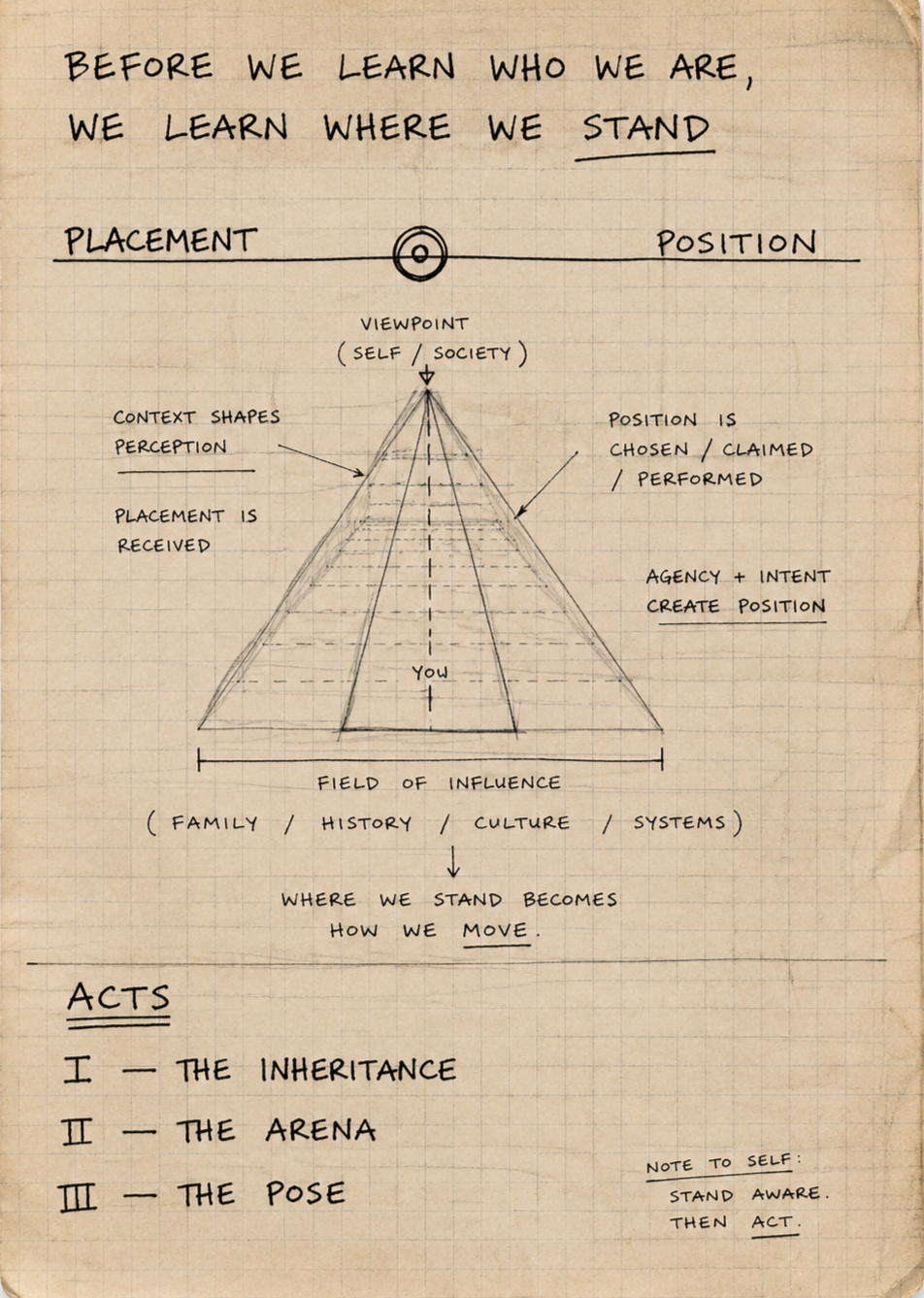
BEFORE WE LEARN WHO WE ARE,
WE LEARN WHERE WE STAND.
PLACEMENT
POSITION
00.2
STATEMENT
WILL EXPLORES THE GAP BETWEEN THE LIFE WE CLAIM AND THE SYSTEMS THAT CLAIMED US FIRST.
Through painting, installation, and object, Ames examines the system that precede choice. These works reflect inherited geographies, expectations, identities, and the pressure to embody borrowed narratives.
WILL is not a conclusion. It is the opening of an inquiry into authorship, agency, and the structures that attempt to design both.
AMES
WILL
2026
KALINER GALLERY, NEW YORK
CURATED ACROSS THREE ACTS
01.0
ACT ONE
THE
INHERITANCE
❋ Words from the Curator “Inheritance is not a single event, but an accumulation of race, geography, family, religion, language, class, expectation. Some of these are spoken aloud, passed down as sayings and instructions. Some are absorbed through proximity, through watching how the people around you move through the world. A father’s repeated phrase and the church you are raised inside both build frameworks that outlast the specific contexts they came from.
Ames grew up in Birmingham, Alabama, inside all of these inheritances at once, and his paintings from this section carry the weight of conditions that were felt long before they were understood. Thaler and Sunstein’s insight is that a choice can be genuinely free and structurally determined at the same time, that the frame shapes the outcome without removing any option from the table. Inheritance is the original frame.”
-Abigail Sempebwa
ADRIFT 40 X 40 IN. ACRYLIC, 2023
CRABS IN A BARREL 16 X 20 IN. ACRYLIC, 2025
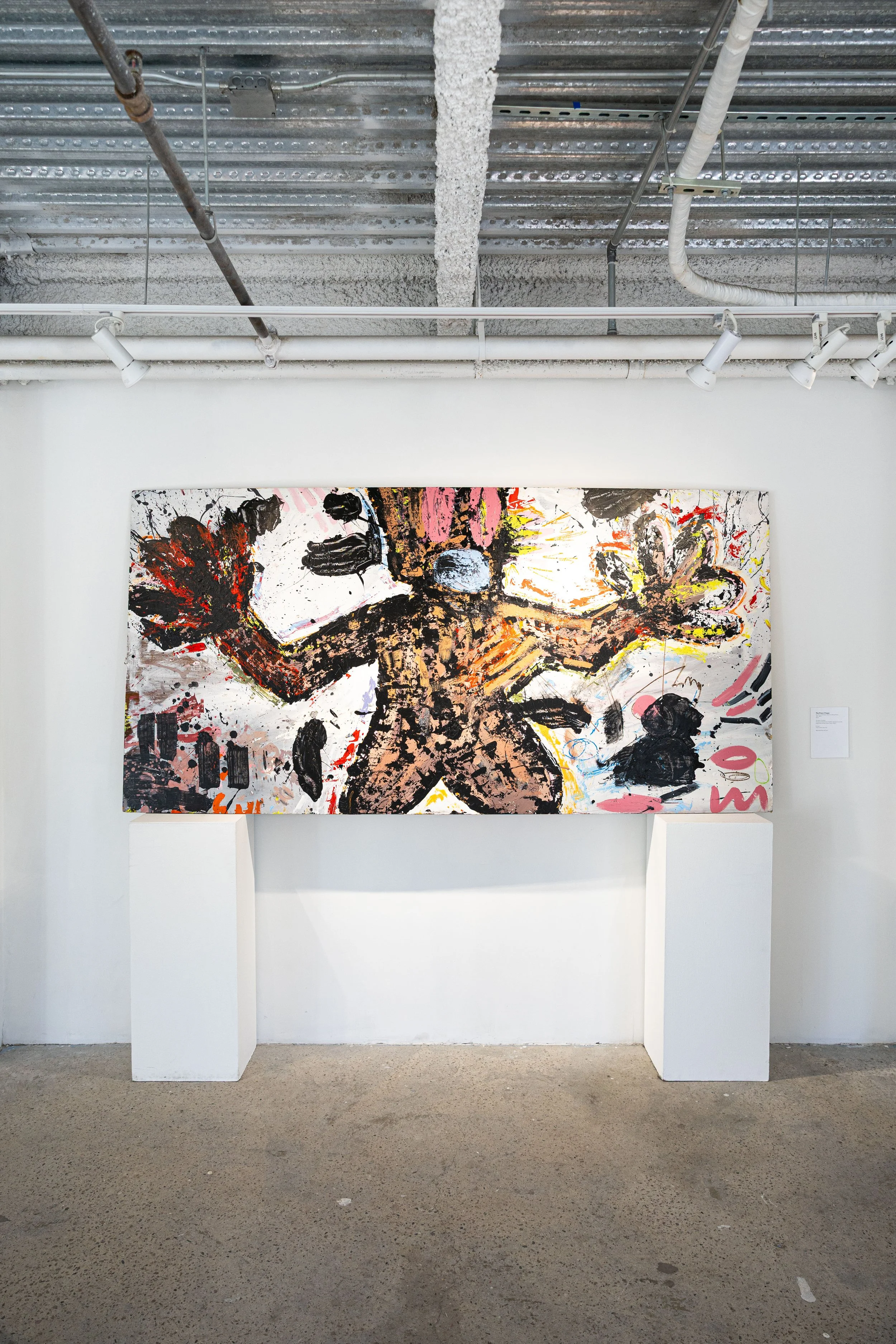
THE PREY’S PRAYER 120 X 48 IN. ACRYLIC AND CHALKY PASTEL, 2023
OBJECTS 01-03
How much of your life did you choose?
02.0
ACT TWO
THE
ARENA
❋ Words from the Curator “Act I traced the conditions that precede conscious choice; this section enters the spaces those conditions funnel you toward. The arena is any structure that measures the body and assigns value to its performance.
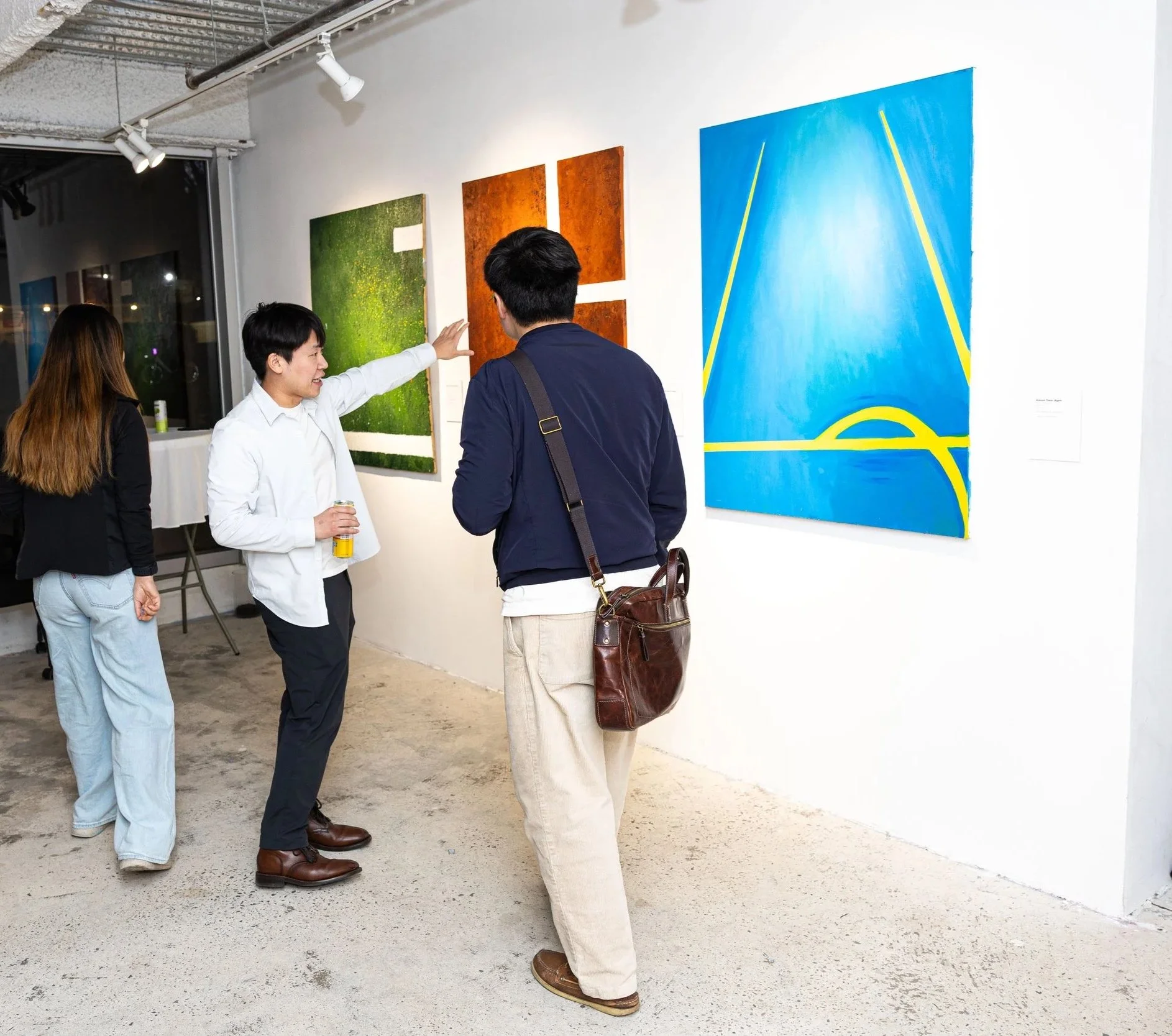
The Act II paintings are more figurative than the first three, and the compositions begin to organize around recognizable structures. Fields and lines appear, the body taking shape against backgrounds that at their nature contain competition and evaluation.That is the critical distinction from the inheritance: you choose to enter. But the moment you do, the terms of your participation are set by a structure you did not build, and the measurement begins on a timeline and a scale you did not choose.
The arena runs on exactly this quality. It gives you a score, and that score feels like progress, but the metrics keep adjusting and the structure never confirms that you have done enough.
Even acts experienced as freely willed are initiated by processes the conscious mind does not control and cannot observe in real time. Aaron Schurger and colleagues demonstrated that the moment of action emerges from gradual accumulation, not from a discrete decision point (Schurger et al., 2012). Neural noise builds toward a threshold, and the crossing of that threshold produces the act. This demonstrates that the arena operates on the same principle even at a biographical scale. Years of family expectation, institutional socialization, generational sacrifice, and the internalized metrics of every system you have passed through accumulate without you noticing, and by the time you register the decision to enter the next arena, the momentum behind it has been building for longer than you can trace.”
-Abigail Sempebwa
OBJECTS 04-08
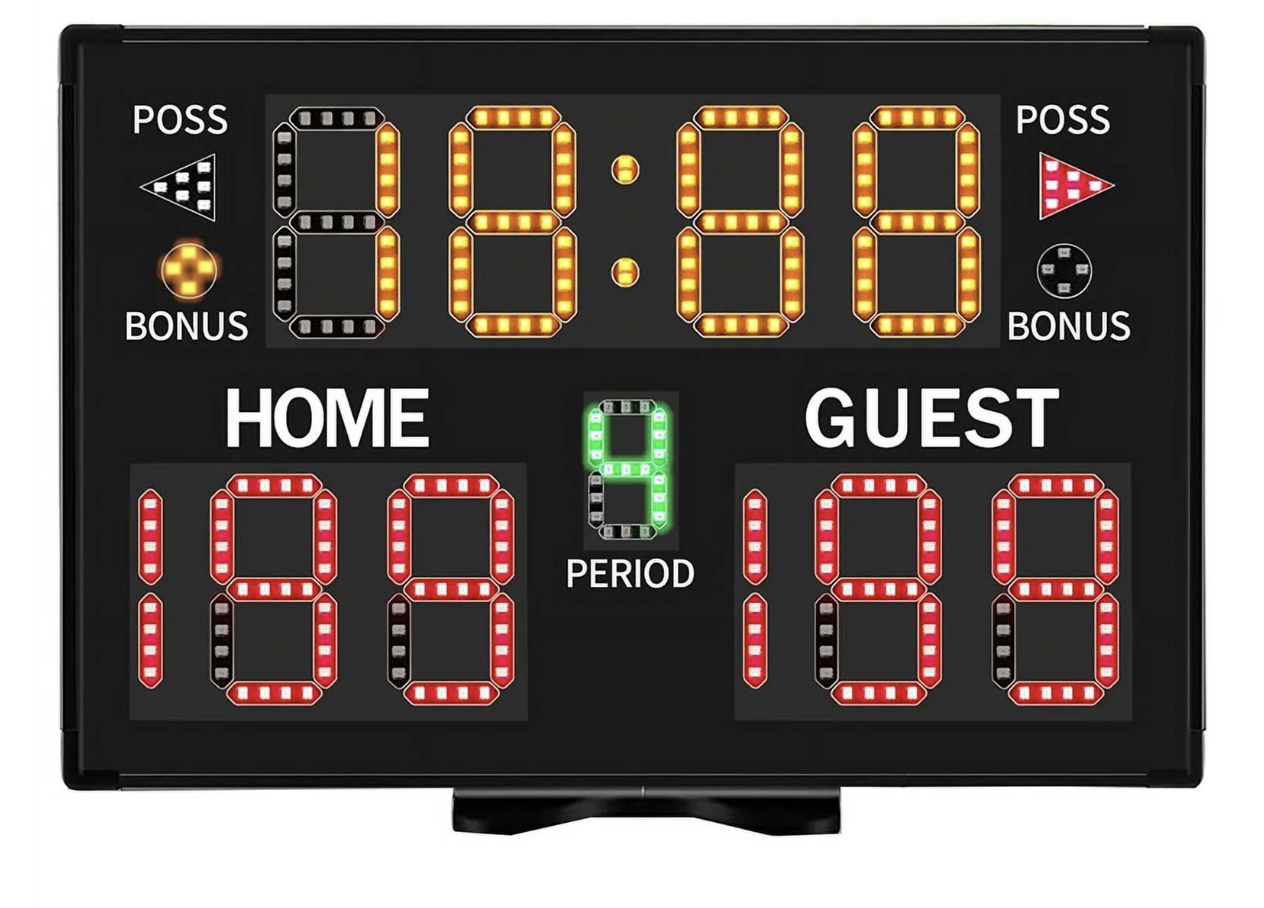
ELECTRONIC SCOREBOARD 9.8 X 14.8 IN. 2026
ALMOST THERE, AGAIN 48 X 60 IN. ACRYLIC, 2026
WHERE I LEARNED TO WATCH 48 X 60 IN. ACRYLIC, 2026
WHERE THE GRASS IS GREENER 48 X 60 IN. ACRYLIC ON WOOD, 2023
Who taught you what counts?
03.0
ACT THREE
THE
POSE
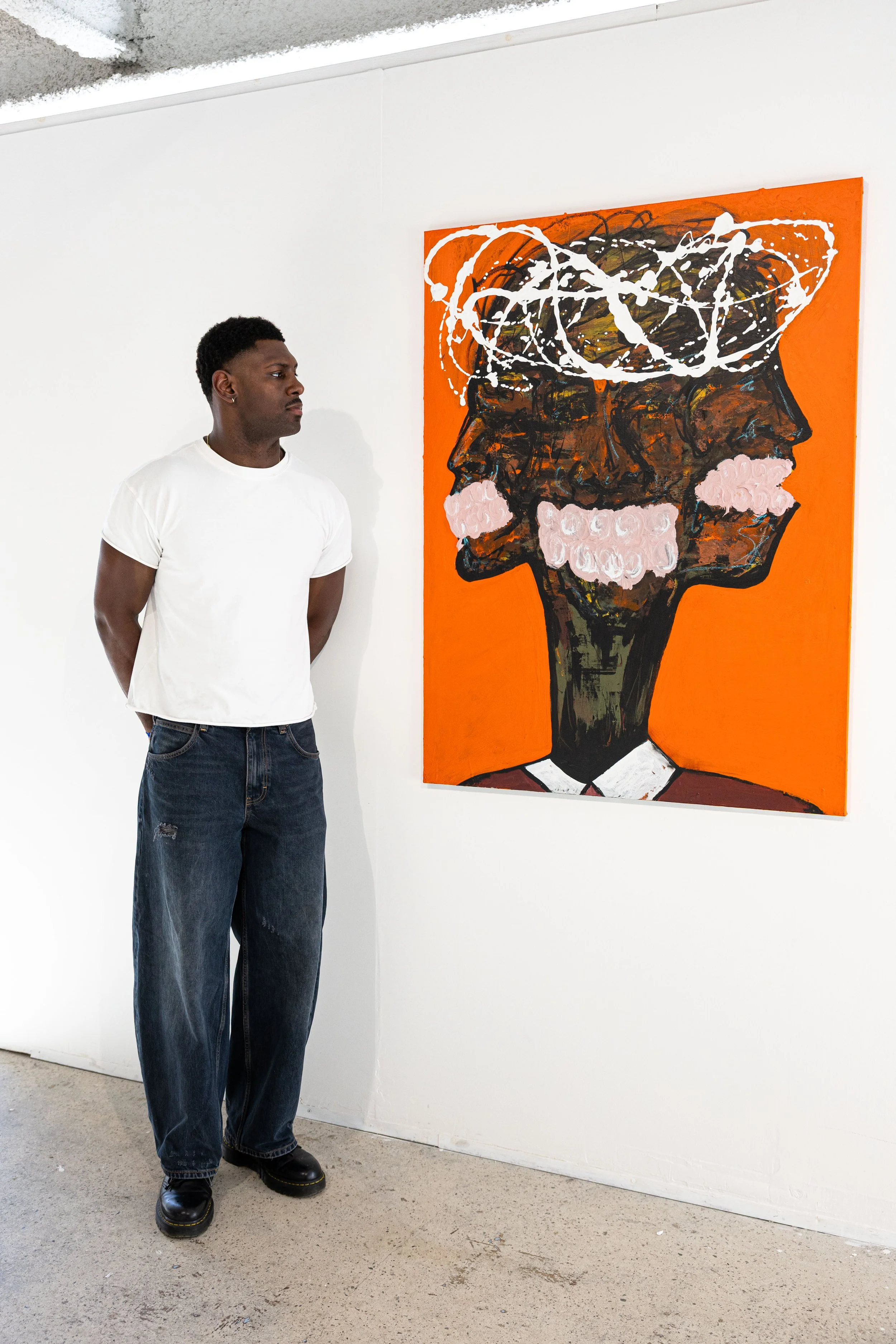
❋ Words from the Curator “The justification, the raised trophy, the system’s receipt, proof that the structure worked, that the body inside it performed on the terms it was given and arrived where the metrics said it should.
The pose is a performance of success, the literal act of composing yourself for display. The smile is forced and does not capture the inheritance you carry or what the arena cost you. The systems that shaped you, measured you, and demanded your performance are invisible in the final image. All the viewer sees is the grin. Judith Butler argued that identity is constituted through repetition, that there is no authentic self hiding behind the performance because the performance is the self (Butler, 1990). After the inheritance has set the conditions and the arena has demanded performance, the pose is the image that results, and the discomfort of Act III is the suspicion that the image is all there is.
Benjamin Libet’s research demonstrated that the brain initiates action unconsciously, before the person is aware of having decided to move (Libet et al., 1983). But Libet also found something else: a narrow window, roughly 150 milliseconds, where the conscious mind can veto the action and stop it before it happens. The systems set the body in motion, the inheritance pushes, the arena measures, the pose performs, but there is a small opening where the self can override. That override is WILL.”
-Abigail Sempebwa
OBJECT 9
FREE WILL 36 X 48 IN. ACRYLIC, 2024
HOW MUCH DID IT COST YOU?